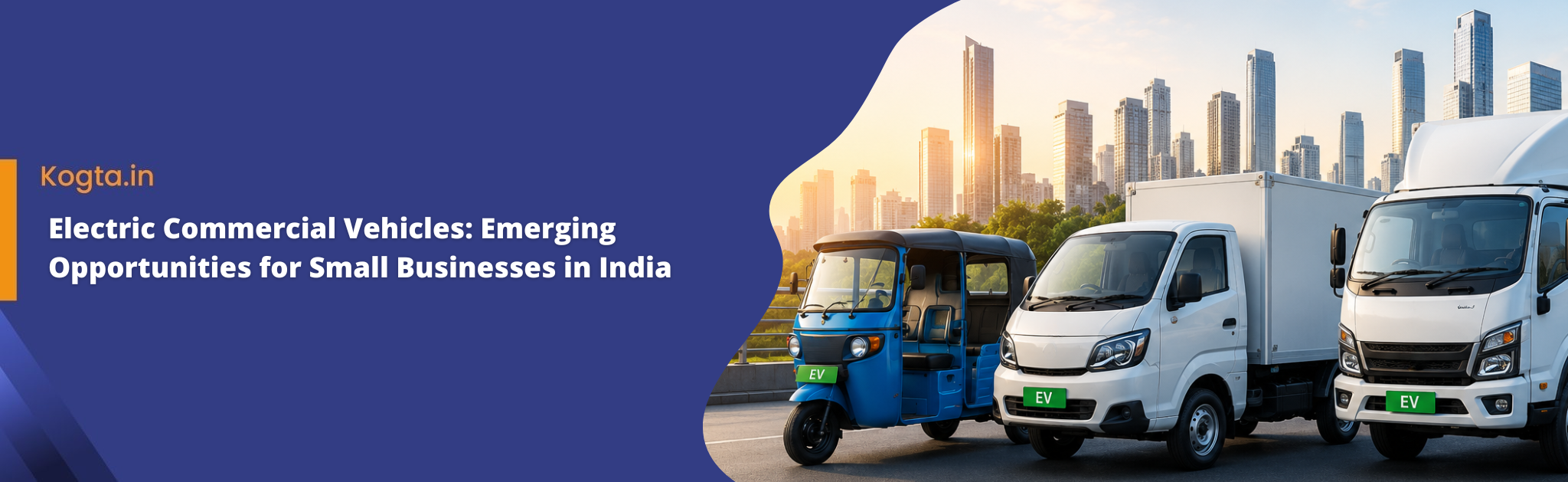
Electric Commercial Vehicles: Opportunities for Small Businesses in India
Introduction
India is at the threshold of a mobility revolution. With rising fuel prices, increasing pollution levels, and the government’s strong push toward clean transportation, Electric Vehicles (EVs) are fast becoming a necessity rather than an alternative. Among these, Electric Commercial Vehicles (ECVs) are gaining remarkable traction—especially among small businesses and MSMEs.
Whether it’s a local delivery startup, a transport operator, or a small logistics company, EVs are opening a new chapter of growth that combines profitability with sustainability. Let’s explore how electric commercial vehicles are changing the business landscape and why this is the right time for small entrepreneurs to embrace this change.
What Are Electric Commercial Vehicles?
Electric Commercial Vehicles (ECVs) are vehicles designed for transporting goods or passengers but powered by electric batteries instead of petrol or diesel. They include:
- Electric two-wheelers – used for quick deliveries and courier services.
- Electric three-wheelers – popular for last-mile connectivity and goods transport.
- Electric vans and minibuses – for shuttle or passenger services.
- Electric light commercial trucks – for logistics and intra-city transportation.
Unlike conventional vehicles, ECVs don’t produce tailpipe emissions and have lower running costs, making them ideal for small businesses looking to improve efficiency and save money.
The Growing Demand for Electric Commercial Vehicles in India
The adoption of electric commercial vehicles is increasing rapidly due to three main factors:
- Government push for cleaner mobility
- Rising fuel and maintenance costs of traditional vehicles
- Availability of affordable EV models and financing
As per industry estimates, India’s EV market is projected to grow at over 49% CAGR between 2023–2030, with commercial vehicles leading this growth. Small businesses form the backbone of this transformation, leveraging ECVs for cost-effective, sustainable operations.
Benefits of Electric Commercial Vehicles for Small Businesses
1. Significant Savings on Fuel and Maintenance
Electricity is far cheaper than petrol or diesel. EVs also have fewer moving parts, reducing maintenance needs like oil changes, filters, and clutch replacements.
For instance, a small delivery business operating 5 electric three-wheelers can save ₹80,000 to ₹1,00,000 annually compared to fuel-based vehicles.
These savings improve profitability and free up funds for expansion or hiring more staff.
2. Government Incentives and Tax Benefits
The government of India, under initiatives like FAME-II (Faster Adoption and Manufacturing of Hybrid and Electric Vehicles), offers generous incentives to promote EV adoption.
Key benefits include:
- Purchase subsidies up to ₹1.5 lakh on electric commercial vehicles.
- Road tax and registration fee exemptions in many states.
- Low GST rate (5%) on EVs versus 28% for diesel/petrol vehicles.
- Accelerated depreciation benefits for businesses adopting EVs.
Additionally, many states such as Delhi, Gujarat, Maharashtra, Tamil Nadu, and Telangana have introduced special EV policies that provide extra rebates and charging infrastructure support.
3. Easy Financing Options for EVs
One of the biggest enablers for small businesses is the growing availability of EV-focused financing. NBFCs and financial institutions like Kogta Financial now provide tailor-made EV loan solutions designed for small entrepreneurs.
Key features of EV financing include:
- Low down payment requirements
- Flexible EMI options
- Quick loan processing
- Financing for battery and charging infrastructure
This means even small business owners with limited capital can easily switch to an electric fleet without financial strain.
4. Enhanced Brand Image and Customer Trust
In today’s market, sustainability is not just a buzzword—it’s a business advantage. Customers increasingly prefer brands that take steps toward environmental responsibility.
By adopting electric vehicles, small businesses can:
- Showcase their commitment to green practices.
- Build stronger brand loyalty among eco-conscious customers.
- Gain preference in corporate tie-ups where sustainability is a criterion.
For example, e-commerce companies often prefer logistics partners using electric fleets for last-mile delivery to meet their ESG goals.
5. New Business Opportunities and Markets
Electric vehicles don’t just reduce costs—they open doors to new business models.
Some growing opportunities include:
- EV-based delivery startups – With platforms like Swiggy, Zomato, and Blinkit promoting EV fleets.
- EV fleet leasing services – Renting vehicles to logistics or e-commerce companies.
- EV charging businesses – Installing and operating public charging stations.
- Rural mobility and distribution – Using ECVs for transporting goods in small towns and villages.
This diversification allows small entrepreneurs to explore new revenue streams in the green mobility ecosystem.
Challenges in Adopting Electric Commercial Vehicles
While the opportunities are vast, small businesses may face certain challenges in switching to electric vehicles:
1. Charging Infrastructure Limitations
Although major cities have growing charging networks, smaller towns still face a shortage. However, new solar-based portable chargers and battery swapping stations are emerging as practical alternatives.
2. High Upfront Costs
Even with subsidies, EVs often have higher initial prices compared to traditional vehicles. But when viewed over the total cost of ownership (TCO), EVs become more economical after 2–3 years of operation.
3. Battery Life and Replacement Costs
EV batteries typically last 5–8 years. Replacement can be expensive, but several manufacturers now offer battery warranties and leasing models to make ownership easier.
4. Lack of Awareness and Skilled Technicians
Many small fleet operators are unfamiliar with EV technology. Training programs and collaborations with manufacturers are helping bridge this gap.
The Future Outlook for Electric Commercial Vehicles in India
The future of electric commercial vehicles in India looks highly promising. The government aims for 30% of all commercial vehicles to be electric by 2030.
Automakers such as Tata Motors, Mahindra, Ashok Leyland, and Piaggio are introducing electric versions of their popular LCVs (Light Commercial Vehicles). Simultaneously, EV financing, battery swapping, and charging infrastructure are expanding rapidly.
As the ecosystem matures, small businesses will have easier access to affordable, reliable, and efficient electric vehicles. This is not just a technological change but a complete business transformation.
How Small Businesses Can Get Started
Switching to electric commercial vehicles can seem complex, but with a structured approach, it’s easier than ever:
- Assess Your Transport Needs – Determine whether you need vehicles for goods delivery, passenger transport, or business operations.
- Compare EV Models – Evaluate options based on range, load capacity, and charging time.
- Check Subsidies & Incentives – Visit state EV portals for latest schemes and benefits.
- Apply for EV Financing – Partner with trusted NBFCs like Kogta Financial for tailored EV loans.
- Plan Charging Solutions – Identify nearby public stations or set up private chargers.
- Start Small – Begin with 1–2 vehicles, track savings, and expand gradually.
Real Example: EVs Empowering Local Entrepreneurs
Take the case of delivery-based micro-entrepreneurs in Tier-2 cities like Jaipur and Indore. By switching to electric three-wheelers, many small logistics operators have reduced their operating costs by up to 60%, while also attracting more business from eco-friendly partners.
This shift demonstrates how electric mobility can empower grassroots entrepreneurs, making their businesses more sustainable and future-ready.
Conclusion
Electric Commercial Vehicles are reshaping India’s business ecosystem. For small businesses, this shift presents a rare opportunity to reduce costs, access incentives, and build a future-ready brand.
With growing financing options, government support, and better technology, adopting EVs is no longer a challenge—it’s a smart investment decision.
Whether you operate in logistics, retail delivery, passenger transport, or supply chain, electric vehicles can become your next growth driver.The future is electric—and it’s time for India’s small businesses to lead the charge.
FAQs on Electric Commercial Vehicles in India
Depending on the model, electric three-wheelers cost between ₹2.5–₹4 lakh, and small electric trucks range from ₹6–₹12 lakh.
Yes. Many NBFCs like Kogta Financial offer dedicated EV loans with flexible EMIs and low interest rates.
Charging time varies from 1 to 6 hours depending on battery capacity. Fast chargers can charge up to 80% in under an hour.
Typically, batteries last 5–8 years, depending on usage and maintenance.
Absolutely. With solar-powered chargers and battery-swapping options, rural areas are now adopting EVs for transport and delivery needs.